c++11, shared_ptr使用数组
2014年8月19日 21:52
最近被项目垃圾的内存管理搞的特别头大,正好这段时间在看《深入理解C++11:C++11新特性解析与应用》,了解了些c++11的特性。于是想着用c++11高大上的智能指针来做内存管理。
所谓高大上,相对于各种天生就支持垃圾回收的语言(如:java,python)来说也是个废才。支持个数组都麻烦的很,各方考证,下面写一个关于 shared_ptr 使用数组的小样例,主要参考 http://stackoverflow.com/questions/14957359/problems-with-shared-ptrt-wrapping-a-dynamic-array
基于shared_ptr的vector
下面是一个基于shared_ptr的vector模板。当然完全没有必要使用 shared_ptr去实现vector,vector的内存管理本来就是透明的。这个地方就是为了展示shared_ptr怎么使用数组。
template <class T>
class Vector {
    shared_ptr<T> ptr_;
    int size_, capacity_;
public:

    Vector()
    :ptr_(shared_ptr<T>(new T[initial_capacity], std::default_delete<T[]>())),
    capacity_(initial_capacity), size_(0) {}

    int size() const {
        return size_;
    }

    void push_back(const T &x) {
        if (size_ == capacity_) {
            capacity_ *= 2;
            T* new_memory = new T[capacity_];
            for (int i = 0; i < size_; ++i) {
                new_memory[i] = ptr_.get()[i];
            }
            ptr_ = shared_ptr<T>(new_memory, std::default_delete<T[]>());
        }
        ptr_.get()[size_++] = x;
    }

    const T& operator[] (int idx) const {
        return ptr_.get()[idx];
    }

    T& operator[] (int idx) {
        return ptr_.get()[idx];
    }
    static const int initial_capacity = 2;
};
这里有两个必须要注意的地方
-
除了使用指向内存的指针初始化 shared_ptr外,还需要传入析够数组的函数。不然当内存的引用数降到0时,会调用 delete 释放一个数组,直接导致程序崩溃,std::default_delete<T[]>()指明调用的是 delete[]
shared_ptr<T>(new T[size], std::default_delete<T[]>());
-
既然没有直接支持数组,shared_ptr 也就没有重载 operator [] 了。查看相关文档https://gcc.gnu.org/onlinedocs/gcc-4.6.0/libstdc++/api/a00267.html才知道,shared_ptr 只支持了两个 operator,外加一个获取内存指针的get方法
std::add_lvalue_reference< _Tp >::type operator* () const
_Tp * operator-> () const;
_Tp * get () const;
因此想要通过下标访问数组元素就可以使用get() 获取原始数组指针,然后使用[]访问,或者直接把这个操作封装起来T& operator[] (int idx) { return ptr_.get()[idx]; }
简单的测试
最后写一个简单的测试程序测试下 Vector 是不是能够zhe,测试程序如下:
class Point {
public:
    Point(int x = 0, int y = 0) { ++counter_; }
    ~Point() { --counter_; }
    static int counter() { return counter_; }
    int x, y;
private:
    static int counter_;
};

int Point::counter_ = 0;

void test_function() {
    Vector<Point> vec;
    Point p;
    for (int i = 0; i < 4; ++i) {
        p.x = i;
        vec.push_back(p);
    }
    cout << vec[vec.size() - 1].x << endl;
}

int main(int argc, const char * argv[]) {
    test_function();
    cout << Point::counter() << endl;
    return 0;
}
测试程序输出如下:
3
0
最后一行输出0,说明 test_function函数退出后 Point 类全部析够,正常!

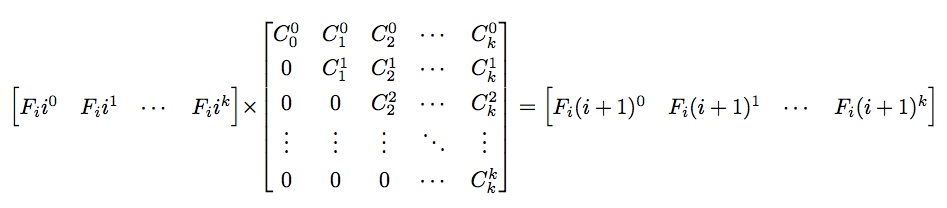



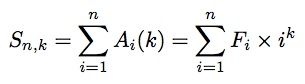
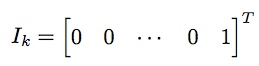



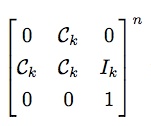 部分由矩阵快速幂求解。时间复杂度为O((2k + 3)3 log n)=O(k3 log n)。矩阵快速幂后乘以初值即可得到答案。